Home › Learn Poland

Learn Poland

A calm, practical place to understand the history, culture, and geography behind your family story. We’re starting with one of the most important topics for ancestry research: the partitions of Poland.

Explore the Partitions Open Research Hub

Why this matters for Karta Polaka

  • Many families left lands that were historically Polish, even when later records named Russia, Prussia, Austria, Germany, Belarus, Lithuania, or Ukraine.
  • The same ancestral town may appear in different languages depending on the period and the empire controlling it.
  • Understanding the partitions can make your document search feel less random and much more focused.
Start Here

Poland did not disappear from memory

The Polish-Lithuanian Commonwealth was one of the major political communities of Europe. In the late 18th century, its neighbors partitioned its territory in stages. Poland vanished from the political map for over a century, but Polish identity, language, faith, and community life continued in homes, parishes, schools, and exile communities.

Research Lens

Why names and records can look confusing

If your ancestor said they were “from Poland,” the later paperwork may still mention Russia, Austria, Prussia, Germany, Galicia, or another jurisdiction. That does not automatically weaken the family story. It often reflects the political reality of the time the record was created.

The Partitions of Poland

Three major partitions reshaped the map and left long shadows in family records, parish jurisdictions, and migration stories.

1772

First Partition

Russia, Prussia, and Austria each took territory from the Commonwealth. For family researchers, this is the beginning of a period where record-keeping may start reflecting imperial structures rather than an independent Polish state.

1793

Second Partition

The Commonwealth lost even more land, this time mainly to Russia and Prussia. This deepened the fragmentation of administration, language, and local governance, which can later affect how towns and surnames appear in documents.

1795

Third Partition

After the final partition, Poland disappeared from the political map. Yet Polish identity survived. For descendants, this often explains why family tradition says “Poland” while official paperwork points to a surrounding empire instead.

Featured Maps

Your partition maps make this story much easier to grasp visually, so I used them as the first anchors for the page.
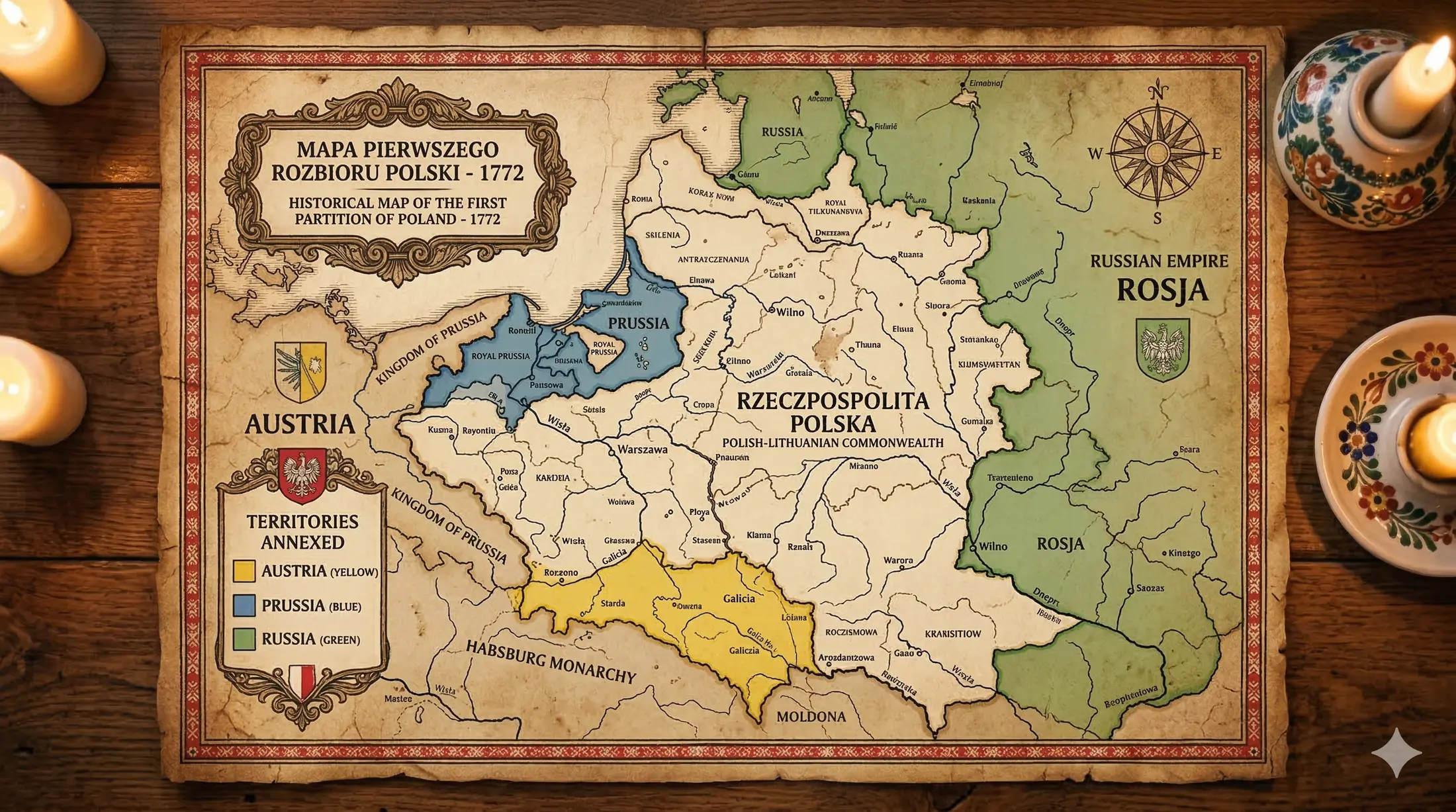
Historical map of the first partition of Poland in 1772
1772 Map

The first partition helps explain why later records may connect a family to Austrian, Prussian, or Russian administration even when their heritage remained clearly Polish. This is especially important when searching parish and civil records by region.

Use the map as a reminder to ask not only “What town?” but also “Under which power did that town fall when the record was made?”
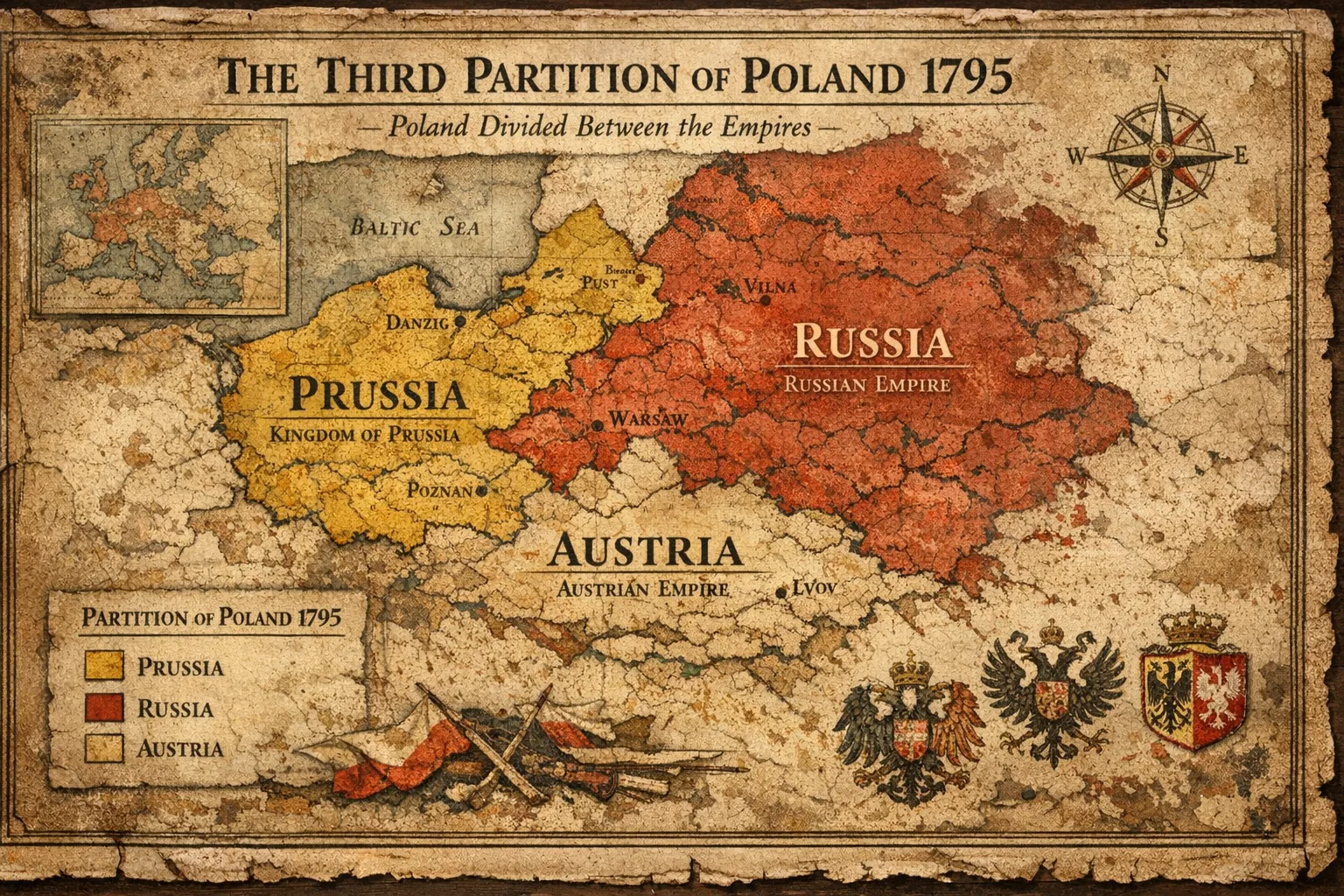
Historical map of the third partition of Poland in 1795
1795 Map

The third partition is one of the clearest ways to show why descendants often inherit mixed historical terminology. A family may sincerely describe itself as Polish while appearing in Russian, Prussian, Austrian, German, or Latin-language records depending on the place and date.

This is exactly the kind of historical context that can make research feel more coherent and less discouraging.

What to expect in records

Once partitions and border changes enter the picture, your search often becomes multilingual and multi-jurisdictional. That is normal. It does not mean your family story is wrong. It means the record trail runs through history.

Save Notes in the Tracker
Town names may shift The same place may appear under Polish, German, Russian, or Latin spelling depending on the source.
Church and civil records may split Birth, baptism, marriage, and death records can live in parishes, diocesan archives, civil registries, or state archives depending on period and locality.
Language does not equal identity A Russian- or German-language record may still concern an ethnically Polish family living under imperial rule.
Migration stories often begin with pressure Political change, military service, economic hardship, and cultural pressure all shaped why families left and how they described where they came from.

More Than Borders

Polish identity survived in everyday life as much as in politics. These are the kinds of themes that help people feel the human side of their ancestry.

Faith and parish life

Churches often preserved both records and community identity, which is one reason parish research matters so much.

Language at home

Even where official administration changed, families often kept Polish speech, songs, names, and memory alive at home.

Family continuity

Marriage patterns, naming traditions, and migration chains often carried identity across generations and continents.

Resilience

For many descendants, learning this history makes Karta Polaka feel less abstract and more like a continuation of a family story.